
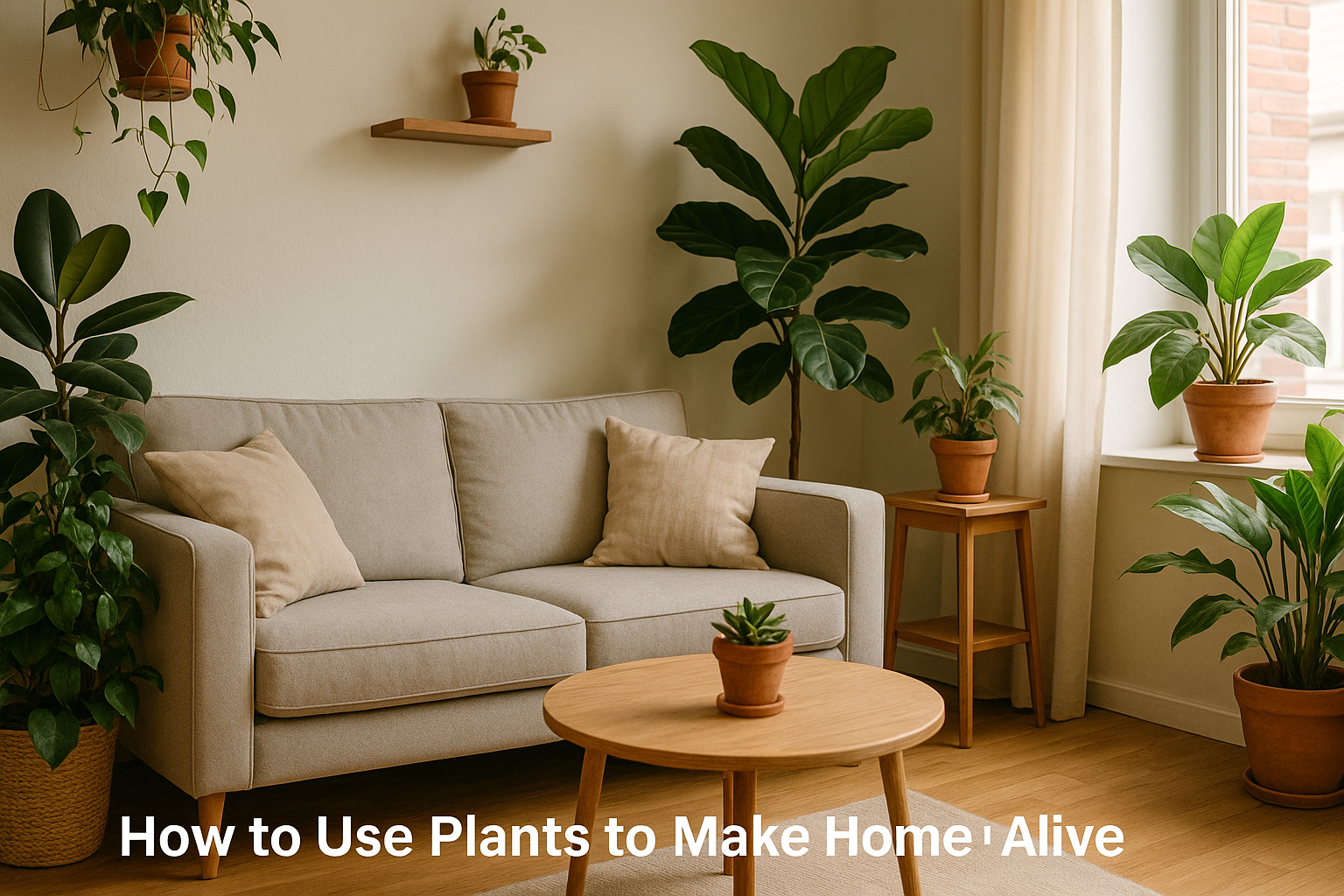
There’s something deeply transformative about having plants in your home. They don’t just add color or fill empty corners — they awaken a sense of connection, beauty, and presence that shifts how we experience our surroundings. A well-placed plant can bring a dead room to life, soften sharp lines, and create a sense of calm that no expensive decor can imitate.
In this article, we’ll explore how to use plants strategically and thoughtfully to make your home feel more alive — not just visually, but emotionally and energetically. Whether you live in a tiny apartment or a spacious house, the ideas here will guide you in bringing nature closer, one leaf at a time.
Why Plants Matter in Interior Design
Plants aren’t just decorative elements; they’re living companions. While furniture provides structure and decor offers style, plants offer life. Their presence subtly communicates growth, care, and attention — qualities that shift the mood of a space in a powerful, almost invisible way.
Studies show that indoor plants can:
- Improve mood and reduce stress
- Purify the air and increase oxygen levels
- Enhance concentration and productivity
- Regulate humidity levels
- Support mental well-being
These aren’t just aesthetic bonuses. They make a real difference in how we feel in our own homes.
Start with the Right Plants for Your Space
Not all plants thrive equally in all homes. The key to success is choosing species that match your lighting conditions, space, and lifestyle.
Best Plants for Low-Light Areas:
- ZZ Plant (Zamioculcas zamiifolia): Almost indestructible, great for beginners.
- Snake Plant (Sansevieria): Tolerant of low light and infrequent watering.
- Pothos (Epipremnum aureum): Fast-growing and forgiving, ideal for shelves and hanging.
Best for Bright, Sunny Rooms:
- Fiddle Leaf Fig: A statement plant with broad leaves.
- Succulents and Cacti: Perfect for windowsills and sunny corners.
- Bird of Paradise: A tropical touch with dramatic foliage.
Best for Small Spaces:
- Spider Plant: Compact and pet-safe.
- Air Plants (Tillandsia): No soil needed, just misting.
- Miniature Ferns: Great for bathrooms or shelves.
By understanding your home’s light and environment, you’re not just decorating — you’re curating life.
Placement Matters: Where to Add Green
The impact of plants depends a lot on where they’re placed. Consider not only the visual balance but also the flow of the room.
Living Room
Add larger plants like a rubber tree or monstera in empty corners to soften the room’s angles. Use smaller plants like succulents or prayer plants on coffee tables or bookshelves. Try grouping three plants of different heights for an organic, dynamic effect.
Kitchen
Hang trailing plants like string of hearts or philodendrons near windows. Place a small herb garden on your countertop or windowsill — not just beautiful, but practical.
Bathroom
This often-overlooked space can be lush and soothing. Try ferns, pothos, or peace lilies — they love humidity and indirect light.
Bedroom
Use plants to create a peaceful, restful vibe. A snake plant on a nightstand helps filter air, while a hoya hanging from the ceiling adds a dreamy touch.
Think in Layers: Height, Texture, and Shape
Designing with plants is like painting with different brush strokes. Mix tall, vertical plants with trailing vines and bushy fillers to create a layered, textured look.
For example:
- A fiddle leaf fig in a basket + a pothos on a floating shelf + a calathea on a side table = an instant mini jungle.
- Combine bamboo palms with aloe vera and baby rubber plants for contrast in leaf texture and volume.
Think of plants as an extension of your personality: some are calm and elegant, others wild and expressive. Let your choices reflect the energy you want in your space.
Use Pots and Planters as Decor Elements
Pots are not just containers — they’re design opportunities. Choose materials, colors, and shapes that match or complement your interior style.
- For minimalist decor: Stick with whites, blacks, or neutrals in ceramic or matte finishes.
- For boho or cozy styles: Use woven baskets, terra cotta, or colorful handcrafted pottery.
- For modern spaces: Opt for geometric shapes, concrete planters, or hanging metal holders.
You can even DIY your pots by painting old containers, wrapping them in fabric, or placing them in macramé hangers for a creative touch.
Plants That Move With the Light
Some plants are more expressive than others — they “follow” the light or move slightly throughout the day. These small movements bring a unique sense of animation to your home.
Examples:
- Maranta (Prayer Plant): Folds up its leaves at night.
- Oxalis Triangularis (Purple Shamrock): Opens and closes its leaves in response to sunlight.
- Mimosa Pudica (Sensitive Plant): Reacts to touch, fascinating and interactive.
These little interactions remind you that you’re sharing space with living beings.
Don’t Forget the Scent
While most people focus on the visual, plants can also transform your space through scent. A jasmine plant, lavender pot, or even fresh-cut eucalyptus can add a soft fragrance that instantly relaxes the senses.
Try placing these near your entryway, windows, or reading nooks.
Care is Part of the Beauty
Having a home full of plants isn’t about perfection — it’s about presence. Learning how much water your fern likes or noticing when your monstera unfurls a new leaf connects you with something slower and more grounded than the pace of daily life.
Even the routine of caring for your plants — watering, rotating, trimming — becomes a ritual of mindfulness.
Let the process be imperfect. Let it teach you patience, gentleness, and adaptation. That, in itself, brings life to your home.
Final Thoughts: Let Life Take Root
Plants are more than decoration. They’re a reminder that growth happens quietly, steadily, and beautifully. That a small corner of green can breathe life into the hardest day. That a leaf reaching toward sunlight is a kind of poetry we can live with.
So start small — a pot by your desk, a sprout in the kitchen. Let the green spread. Let it change your rooms. Let it change you.
Your home doesn’t need to be perfect.
It just needs to be alive.