
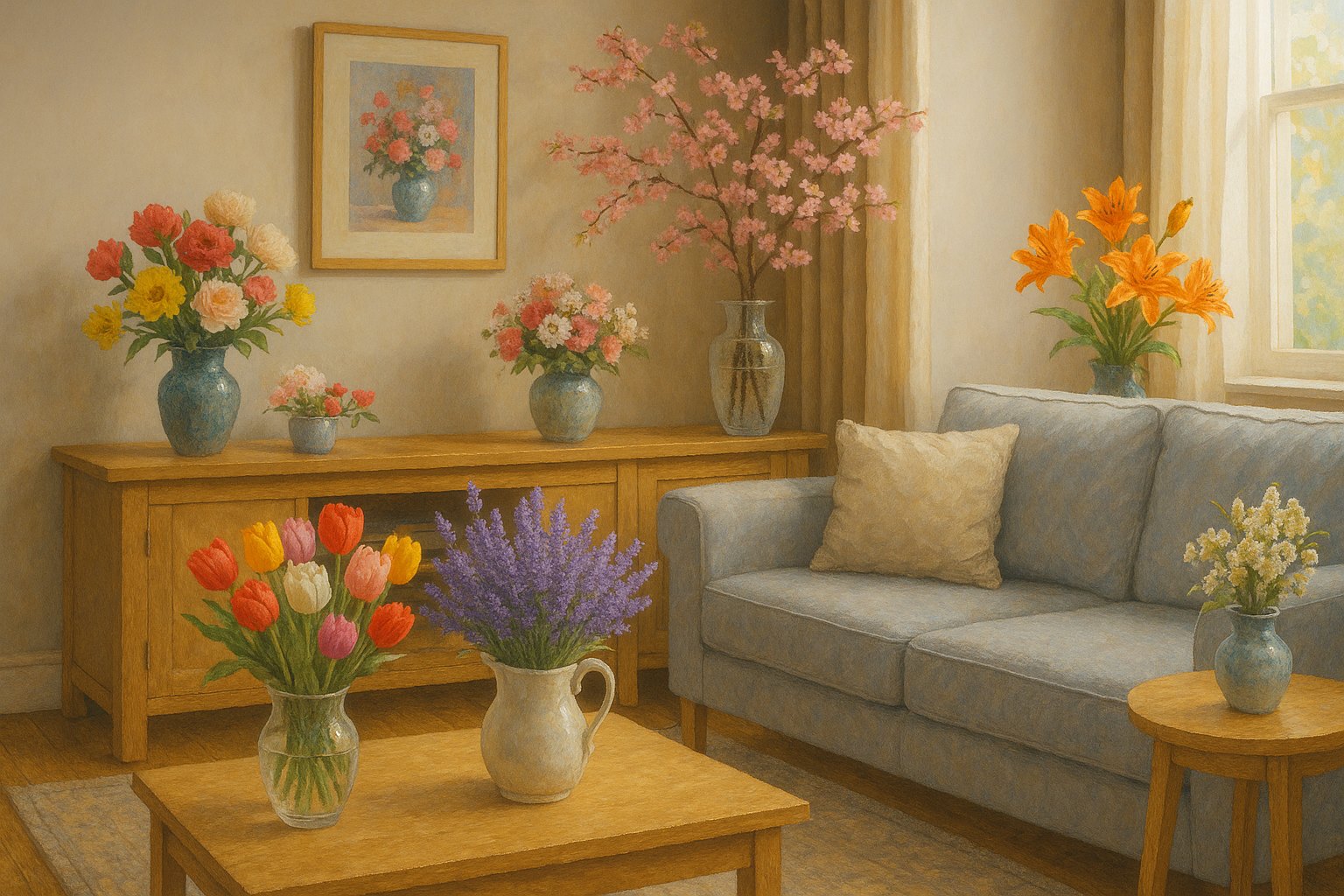
In the quiet intimacy of a small living room, every object carries meaning. The chair by the window, the shift of light across a cushion, the quiet stack of books — all part of a visual and emotional poem that speaks of presence, rhythm, and retreat. But among all elements of interior comfort, few are as transformative — and quietly alive — as flowers.
To invite nature indoors is not merely an act of decoration. It is an expression of softness, of transition, of emotional texture. And in small living spaces, where each object must earn its place, floral arrangements hold a unique power — to evoke joy, serenity, and fleeting, timeless beauty.
A Place for Blooming: Why Flowers Belong in Compact Spaces
Flowers speak with subtle power. They lift the spirit, inspire calm, and renew our connection to the changing rhythms of the natural world — even in the smallest apartment, loft, or studio.
Unlike furniture or art pieces, flowers are:
- Seasonal and ever-changing
- Adaptable to every container and surface
- Givers of color, fragrance, and symbolic weight
- Ephemeral — they invite us to live in the present
Their impermanence is precisely what makes them so meaningful. In small spaces, where visual noise must be minimized, flowers provide contrast and freshness. They soften edges, punctuate silence, and create a kind of gentle movement without clutter.
Choosing the Right Flowers for Small Spaces
In small interiors, scale is everything. A floral display must amplify its emotional impact while respecting the spatial limitations. That’s where thoughtful selection becomes art.
Here are timeless and effective floral choices:
Tulips – With graceful, upright stems and soft color gradients, they exude simple elegance.
Lavender – Pale, slender, fragrant — ideal for calm corners or shelves near sunlight.
Miniature Roses – Compact and romantic, with a vintage mood.
Calla Lilies – Minimalist and sculptural; they bring a sense of calm and purity.
Ranunculus – Soft, layered petals that create gentle drama.
Orchids – Delicate and modern, they thrive in minimalistic aesthetics.
Daisies and Narcissus – Light, joyful, and seasonally appropriate.
Cherry Blossom Branches – Poetic and temporal; perfect for early spring statements.
Each of these blooms adapts well to small containers, corner arrangements, or single-vessel presentations that become visual poetry.
Placement as Poetry: Where Flowers Speak Loudest
Small living rooms are like short poems — brief in length, but powerful when composed well. Flower placement must be deliberate, almost like punctuation.
Consider the following placements:
- A slender vase of tulips on a low coffee table
- Lavender in a ceramic bottle near the window’s light
- A single orchid resting beside a reading chair
- Cherry blossom branches arching over a narrow console
- Dried wildflowers rising from a wall-mounted glass cylinder
Let the flowers mark emotion, not overwhelm it. Let them define moments — the hush of morning light, the calm of evening, the quiet companionship of reading.
Styling with Containers and Texture
The flower is only part of the story. The vessel that holds it shapes the narrative. In smaller interiors, subtlety often prevails, but don’t fear personality.
Ideal containers for small spaces include:
- Matte ceramics in soft, earthy tones
- Transparent glass vases for clean silhouettes
- Repurposed jars or vintage pitchers
- Small woven baskets with hidden liners
- Slim metal vases for an industrial touch
For texture and layering, incorporate:
- Linen or cotton runners on wooden surfaces
- Rough-hewn trays or boards to group items
- Natural coasters beneath each arrangement
- Books stacked beneath vases for height variation
Let the floral display feel integrated, not staged — a living element within the fabric of your home.
The Ritual of Care: Presence in Practice
Living with flowers cultivates presence. Their beauty is fleeting. Their needs are gentle. But their care becomes part of your day, inviting mindfulness.
A few quiet rituals:
- Refresh water every two to three days
- Trim stems at an angle to extend freshness
- Remove wilting petals to allow beauty to remain
- Avoid placing arrangements near heaters or air vents
- Combine fragrant flowers with neutral greens for balance
And when the blooms fade — let them go. Replace them with new ones. Embrace the rhythm of impermanence as part of your home’s emotional language.
Beyond Aesthetics: The Emotional Dimension
Flowers are never just visual. Their presence touches memory, emotion, and even our sense of time. A sprig of lavender may recall a summer abroad. A single daisy may bring the simplicity of childhood back into focus. A cherry blossom’s bloom and fall may reflect the bittersweet pace of the season.
In small living rooms, where space is precious, these layers of meaning are even more powerful. One flower may say more than a wall of framed prints. A well-placed bouquet may soften more than any expensive lighting.
A Final Bloom: Nature as Companion
In the quiet of a small living room, where sound is softened and movement is gentle, flowers are not simply decorative accents. They are companions.
They accompany your mornings. They color your afternoons. They become part of your interior story.
You do not need many. A single bloom in a reused bottle. A stem reaching for the sunlight on the sill. A few wildflowers in a low bowl. These are gestures of care, of attentiveness, of welcome.
To live with flowers in a small space is to say: there is room here for beauty. No matter how narrow the wall. No matter how modest the view.
Let nature come in. Not as a guest. But as a part of home.