
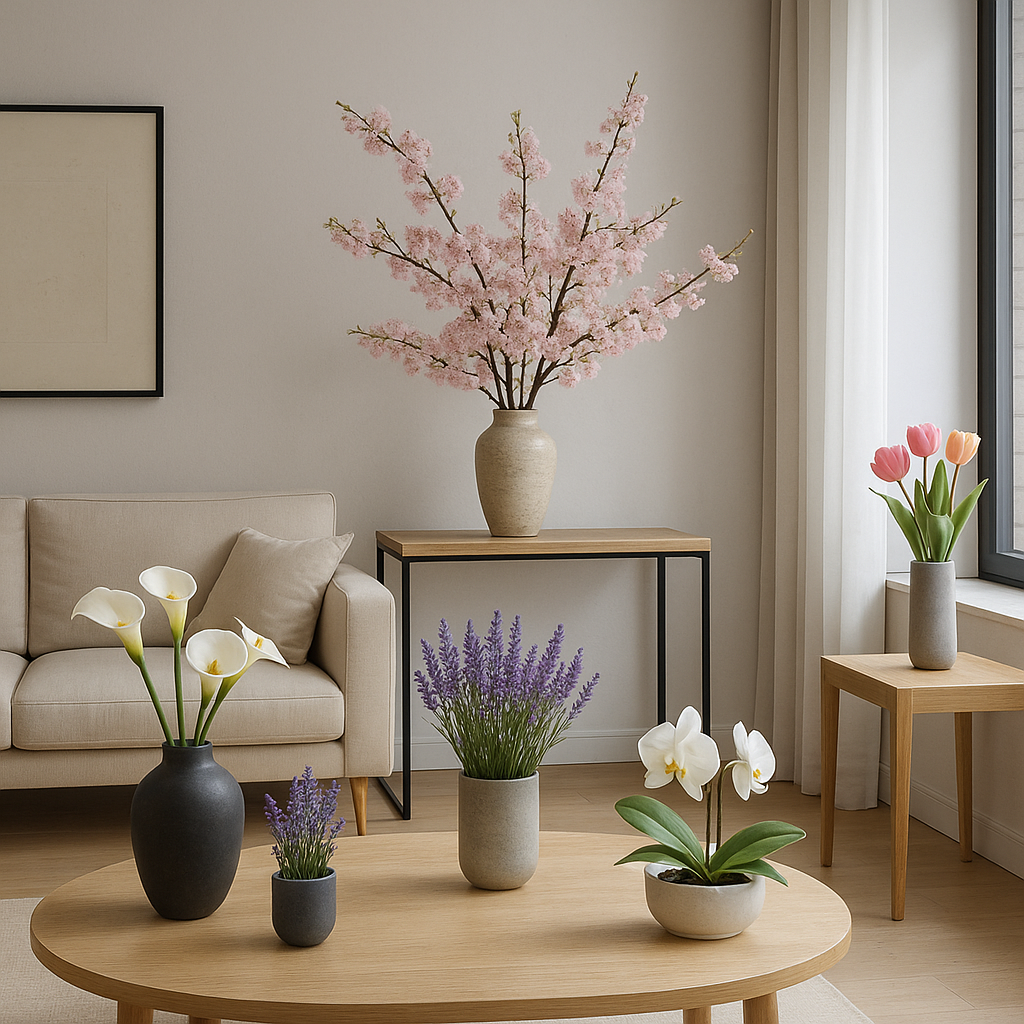
Between the sharp brilliance of summer and the hush of winter, there is a season not defined by extremes, but by nuance. These transitional periods — spring easing into summer, or summer falling into autumn — carry with them a kind of quiet anticipation. They are moments of atmosphere, where change is present but not declared.
It’s within this tender space that our homes become mirrors of the world outside — not through reinvention, but through suggestion. And among all the tools of design, flowers are perhaps the most eloquent in expressing this in-between state.
They don’t shout change. They whisper it.
They don’t redesign the room. They refresh its rhythm.
This article explores how to bring that rhythm indoors, using floral design as a way to align our interiors with nature’s subtleties and transitions.
The Emotional Language of Transitions
Why do transitional seasons stir something within us?
Because they are full of questions: What’s coming next? What must we let go of? What remains?
Design that responds to these moments becomes more than functional — it becomes emotional. It reflects the tension between permanence and change, between warmth and coolness, between fullness and stillness.
Flowers are perfect companions in this space. Their presence is fleeting, their beauty impermanent. But their impact is lasting. They help us live with change, not resist it.
Why Flowers Matter Between Seasons
During transitional times, flowers:
- Bring color transitions into neutral palettes
- Introduce warmth or coolness, depending on tone and placement
- Evoke memory and expectation simultaneously
- Create atmosphere without requiring full redecoration
- Echo the cycles of nature inside the home
Most importantly, they remind us to be present. Their fragility invites attention. Their color marks the passage of time.
Florals for Late Spring into Summer: Light, Fresh, Expectant
This is the season of expansion — longer days, brighter skies, the scent of renewal still fresh.
Ideal flowers for this time include:
- Peonies: Voluptuous and soft, they evoke celebration and new beginnings
- Dahlias: With structured petals and vivid tones, they balance boldness with grace
- Miniature Sunflowers: Joyful and manageable, bringing energy without excess
- Lavender: Calming, fragrant, and gently wild
- Roses in cream and blush: Romantic and quietly transitional
Pairing tips:
- Combine peonies and lavender in wide, shallow bowls
- Use green sprigs — mint, rosemary, eucalyptus — to anchor the arrangements
- Choose ceramic or recycled glass vases in pastel, clay, or sea-glass tones
This is a time for softness with direction. Let your floral displays feel like fresh air through an open window.
Florals for Summer into Autumn: Depth, Warmth, and Earth
As sunlight turns golden and shadows grow long, our interiors ask for richer tones and deeper textures. Floral design here leans into earth, fruit, and memory.
Recommended flowers and botanicals:
- Marigolds or calendula: Warm golds and oranges reflect harvest tones
- Poppies (Papaver): Bold and fragile, like late summer storms
- Heathers (Urze): Textural, rustic, and quietly poetic
- Burgundy dahlias or dark lilies: Moody and elegant, perfect for late-afternoon light
- Dried cherry blossoms or preserved magnolia branches: Sculptural and meaningful
Styling ideas:
- Introduce thicker stems and dried textures
- Place arrangements in wooden bowls, iron vessels, or linen-wrapped jars
- Let flowers spill from the vase slightly, like vines moving toward rest
This is a time to ground the interior, to echo what’s happening in the trees and fields beyond your window.
Placement That Reflects the Season
You don’t need an abundance of flowers. You need intentional placement.
Here are some suggestions that work across both transitions:
- A single bloom beside the bed, catching morning light
- A tall ceramic vase in the hallway with cherry branches or dried wheat
- A glass jar with lavender on a kitchen shelf
- A low tray of miniature dahlias and herbs in the center of the dining table
- Scattered petals across a linen runner — ephemeral and expressive
Treat your floral design as you would a seasonal poem — brief, fragrant, and full of meaning.
Light, Color, and Temperature
Flowers behave differently under different light. Let them find their place in dialogue with sunlight and shadow.
- Morning light for flowers that open gently, like tulips or peonies
- Afternoon shadow for richer tones — burgundy, burnt orange, deep green
- Golden-hour corners for branches or textured arrangements
- Evening lighting for subtle scents like lavender or dried herbs
The idea is not to force attention, but to encourage noticing. When light finds flowers at the right hour, your entire room can change tone.
A Palette That Grows and Fades
One of the most powerful strategies in transitional floral design is to let the color palette evolve.
Start with spring: creams, blushes, soft greens
Move into summer: coral, lemon yellow, lavender
Slide into autumn: burnt orange, sienna, burgundy, dried neutrals
Allow the palette to move across time — just as nature does. You don’t need a fixed aesthetic. You need a flow.
Final Thought: A Home That Breathes with the Earth
Transitional seasons remind us of something simple: change is always here. Not loud, not sudden — but constant. Floral design gives us a way to live with that truth, to celebrate it rather than resist it.
A bowl of golden dahlias in a quiet room.
A handful of lavender drying by the stove.
A single branch, arched with memory, beside the mirror.
These are not just decorations.
They are gestures of presence.
Of softness.
Of connection.
So let your home shift. Let it breathe. Let it bloom — not in perfection, but in rhythm.