
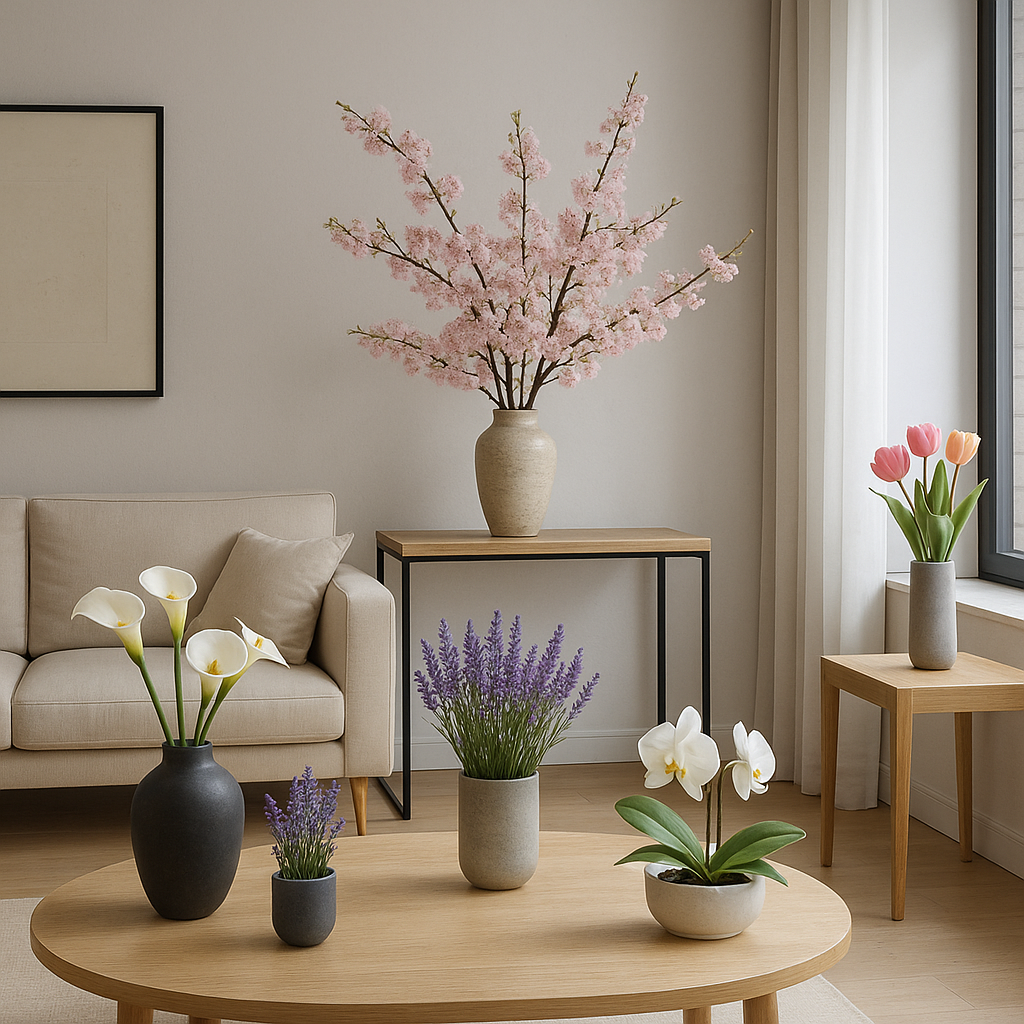
A home is more than structure. It is a mood, a tempo, a language. It breathes with the light that enters through its windows and settles in its corners. It listens to the rhythm of mornings, afternoons, and the quiet arrival of evening. Within this symphony, flowers are not just decoration — they are participants. They echo the day’s progression. They translate sunlight into emotion.
This article explores how to use light and flowers together to shape the atmosphere of your living space. From bold blooms to soft shadows, we discover how nature’s most fragile offerings bring not only visual beauty but also emotional truth into the home.
Light and Bloom: A Living Conversation
Where light enters, life follows. And flowers, in their delicacy and openness, are ideal interpreters of light. Their petals catch it, their colors respond to it, and their presence shifts with every sunbeam.
This pairing matters because:
- Light brings movement; flowers bring stillness
- Light energizes a space; flowers soften it
- Together, they guide mood — awakening a room in the morning, calming it at dusk
When you style your interior with flowers, think beyond the bloom. Consider how it will interact with the sun, with shadow, and with the passing hours.
Choosing Flowers that Speak the Language of Light
Some flowers reflect light with clarity and brilliance. Others absorb it, offering softness and intimacy. The key is to match the floral character with the lighting conditions of your home.
Bright and reflective — ideal for sun-filled rooms:
- Tulips: Their smooth petals glow in the morning light
- Orchids: Elegant and luminous under diffused daylight
- Sunflowers: Hold the sun within them, radiant and open
- Lilies: Their large forms shine warmly even in indirect brightness
- Cherry blossom branches: Light filters through their petals like poetry
For low light or filtered shadows:
- Lavender: Gentle and aromatic, blending into softer atmospheres
- Peonies: Voluminous, with layered petals that create their own inner glow
- Roses in muted tones: Understated but resilient, ideal for deeper corners
The flower you choose should suit not only your taste but the emotional tone of the light where it lives.
Placement as a Gesture of Awareness
Placement is not simply functional — it’s emotional. A flower’s position in a room can turn a space from neutral to nurturing.
Let the light guide your decisions. A vase should not occupy a space — it should respond to it.
Ideas for different light directions:
- South-facing windows: Use clear glass vases with tall stems like tulips or sunflowers. Let light move through water and create shadowplay.
- East-facing breakfast nooks: Place a small bowl of peonies or blush roses to welcome the golden glow of morning.
- Filtered light through sheer curtains: Cherry blossoms or lavender in soft ceramic vessels bring texture to softened light.
- Evening-lit rooms: Deep-colored flowers like burgundy dahlias or dark lilies, paired with warm lamps or candlelight, enhance intimacy.
Don’t hesitate to shift arrangements weekly. Let your flowers migrate, just like the sun.
The Role of the Vase: Form, Texture, and Silence
Flowers are never alone. Their vases, the surface they sit on, and the wall behind them all contribute to the story.
- Transparent vessels invite light to pass through stems and water, extending brightness.
- Matte ceramics capture shadow and create depth.
- Stone, terracotta, or wood bring earthiness and a quiet, grounding effect.
- Lace or linen runners, rough trays, natural backdrops build texture into your composition.
Think of the flower not just as an object but as a presence. Where it lives — the color, the surface, the nearby light — shapes how it speaks.
Letting the Seasons Guide the Scene
As the sun shifts with the months, so too should your floral language. There is no need for reinvention — only attunement.
- Spring: Use delicate blooms in light-filled corners. Let freshness be your theme.
- Summer: Embrace vibrancy. Let tulips, sunflowers, and poppies stretch in the sun.
- Autumn: Work with filtered light and fading tones — rich oranges, deep reds, dried grasses.
- Winter: Let minimalism reign. A bare cherry branch near a window can feel more powerful than a full bouquet.
Your home becomes a living reflection of the outside world — shaped by cycles, enriched by simplicity.
Final Reflection: A Room That Breathes with Light
We live much of our lives beneath artificial lighting and surrounded by fixed interiors. But the light still changes. The day still moves. Flowers know this rhythm. They open to the morning. They rest in the evening. They do not resist time — they embody it.
When we invite flowers into the home, we allow that rhythm to return. We let go of static design and embrace seasonal softness. A single tulip in a glass vase. A branch leaning toward the last light. A lavender sprig on a windowsill.
This is not mere decoration.
This is design with feeling.
This is how a room breathes.