
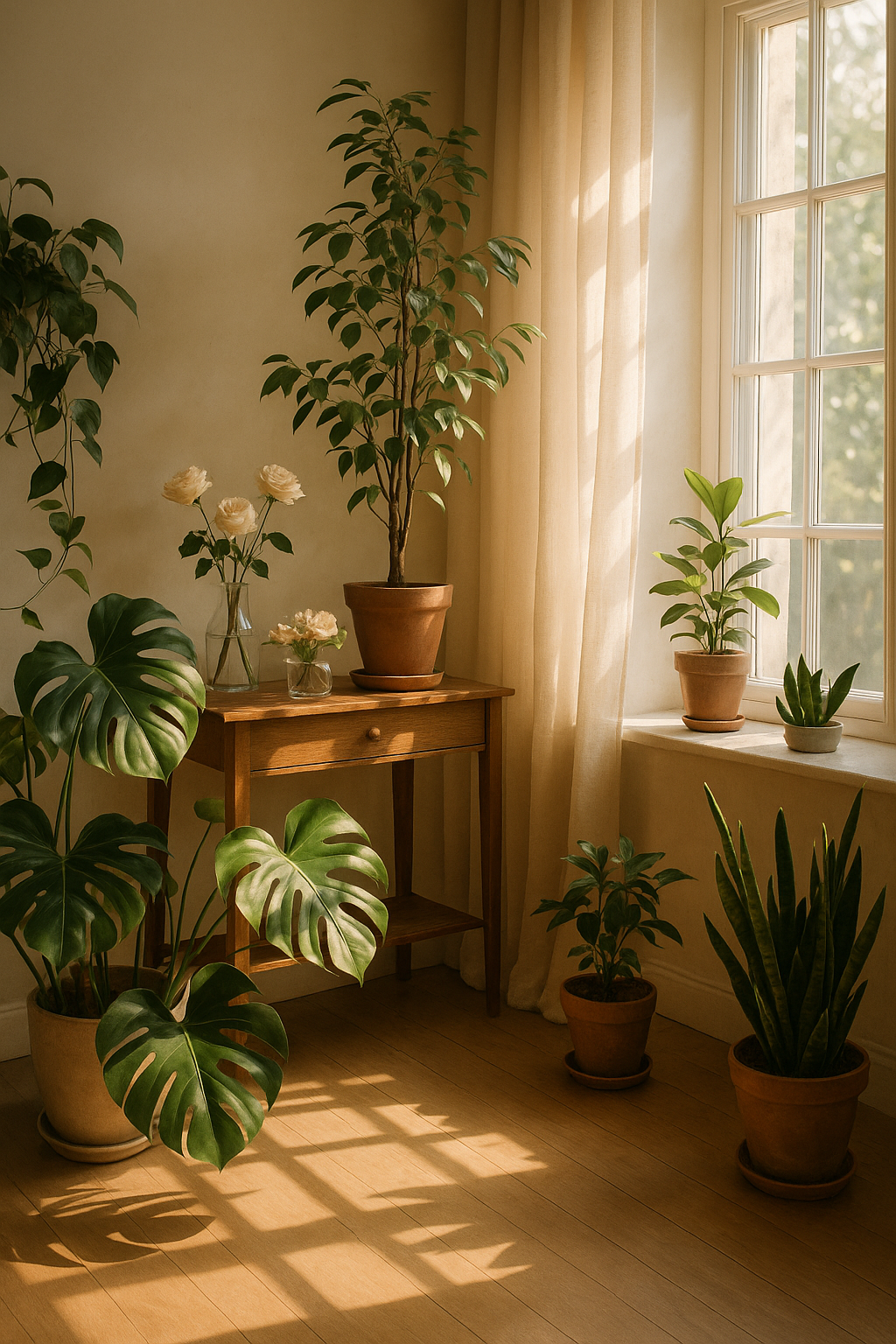
Let Light Lead the Way: Designing with Natural Illumination and Indoor Plants
Light is more than a design tool — it is a living presence. It enters a room not only to brighten, but to animate. It marks the passage of time, reveals textures once hidden, softens or sharpens edges, and — in the company of plants — it becomes a quiet dialogue between the interior and the natural world.
No artificial substitute replicates what sunlight does in a space. It rises slowly in the morning, awakening the corners. It cascades in midday, decisive and golden. It recedes at dusk, leaving behind a hush of elongated shadows. To live with light is to live in rhythm. To design with it — especially alongside indoor plants — is to honor that rhythm.
This article explores how natural light can shape not only your plant care but the entire emotional and visual architecture of your home. It is a study in illumination, in placement, and in the poetry of growth.
Light as the Unseen Architecture of Design
When we speak of architecture, we think of walls and windows, of floor plans and ceilings. But light is its own kind of architecture — one that reshapes a room every hour. It creates depth and softness. It allows colors to breathe. It sets the tone of our daily rituals.
Light:
- Animates surfaces with movement
- Enhances texture in wood, linen, stone, and foliage
- Brings out true color in flowers and leaves
- Serves as a visual conductor, drawing the eye across a room
- Imbues space with emotion — clarity, calm, energy, or intimacy
When paired with plants, light ceases to be abstract. It becomes visible — a ray on a leaf, a glow through translucent petals, a dancing shadow on the wall. The result is not only beautiful, but alive.
Plants and Their Choreography with the Sun
Plants are born to follow light. In nature, they lean, reach, and even rotate to capture the sun’s gifts. Indoors, that instinct remains. Their performance is slow, but constant. A snake plant turns toward a window. A monstera stretches where the light is strongest. A peace lily wilts in dim corners and blooms anew when it finds its place in brightness.
Understanding how plants interact with light is key to both their survival and their stylistic success.
The Four Natural Light Conditions at Home
Bright Direct Light
Found near south-facing windows or unobstructed east-facing ones.
Ideal for:
Succulents, cacti, aloe vera, jade plants
These plants thrive under strong sun. Use terracotta or ceramic pots, and position them on sills, benches, or minimalist shelves. Let the light saturate them, and allow their sculptural forms to cast bold shadows.
Bright Indirect Light
Sunlight filtered through sheer curtains or bouncing off light walls.
Ideal for:
Monstera, fiddle-leaf fig, snake plant, peace lily
These plants appreciate brightness but not harsh rays. Place them near windows but away from direct exposure. The filtered light lends a soft, luminous glow that flatters broad leaves and deep greens.
Medium Light
Ambient daylight from large windows or skylights, without intense exposure.
Ideal for:
Pothos, calathea, rubber plant, spider plant
These species are versatile and forgiving. Style them on tiered plant stands or hang them near diffused light sources to create a layered effect.
Low Light
Interior rooms, shaded corners, or spaces with minimal sunlight.
Ideal for:
ZZ plant, cast iron plant, Chinese evergreen
Here, design becomes more intentional. Use soft lighting to complement what nature lacks. Even in low light, plants bring form and serenity. Choose reflective surfaces nearby — mirrors, brass, or light walls — to amplify available light.
Light as Time: Designing for the Hours of the Day
The sun shapes not just our space but our schedule. Use it as a compass:
Morning light is cool, gentle, and full of promise. Place contemplative plants — lavender, pothos, or jasmine — where the first rays fall. These become companions for quiet mornings and tea by the window.
Midday light is strong, directional, and crisp. This is the time to showcase bold forms — fiddle-leaf figs, bird of paradise, or orchids. Let this light energize the space and highlight architectural foliage.
Evening light is golden, angled, and slow. It flatters soft textures and warms the room’s tone. In this light, trailing vines and flowering plants like begonias and kalanchoe become painterly. Let them bask.
The Art of Plant Placement: Where Light Meets Beauty
To place a plant is to create an experience — for the plant and for the eye.
- Elevate trailing plants on floating shelves where afternoon sun draws their silhouettes against the wall.
- Anchor large plants like monstera or rubber plants beside a curtained window — their shadows will paint the room.
- Cluster small pots near kitchen or bathroom windows to create a still life that shifts through the day.
- Let light fall behind a translucent leaf. A calathea under filtered morning light becomes luminous from within.
These are not just decorative decisions. They are poetic ones. Placement becomes narrative.
Reflective Materials and Light Amplification
Sometimes, it’s not the light you change — but how you extend it. Use surfaces and materials that reflect and scatter natural light.
- Place a mirror behind a sun-loving plant to double its presence
- Use glossy ceramic planters that glint with sunlight
- Hang art or photos in glass frames that catch the light and echo plant silhouettes
- Paint walls in soft neutrals — whites, sand, stone — to help diffuse brightness across the room
Through reflection, your plants not only grow — they glow.
Letting Plants Become the Light
A healthy plant becomes a source of visual warmth. The shine of its leaves, the play of light across its surface, its responsiveness to sun and shadow — all these are forms of quiet brilliance.
A spider plant in a hanging pot near a window isn’t just décor. It becomes a suspended moment — one that shifts as the sun does. A snake plant in afternoon light casts a striped shadow. A philodendron on a low table welcomes morning with stillness and grace.
In this way, your plants become part of the light’s performance.
Final Thought: Living with Light, Designing with Life
We often chase light with artificial means: lamps, LEDs, spotlights. But the true gift of natural illumination is that it changes. It moves. It awakens one room and quiets another. It asks us to slow down and pay attention.
So begin with light. See where it lands, how it softens or sharpens. Let it guide your hands when you style, and let your plants respond as they always have — naturally, instinctively.
When your home breathes with the rhythm of sunlight and greenery, it becomes something more than a composition. It becomes a place of presence.
Let your design be living. Let your rooms hold light like water holds reflection. And let the plants — humble, green, reaching — be your daily reminder that beauty lives in light, and grows in attention.