
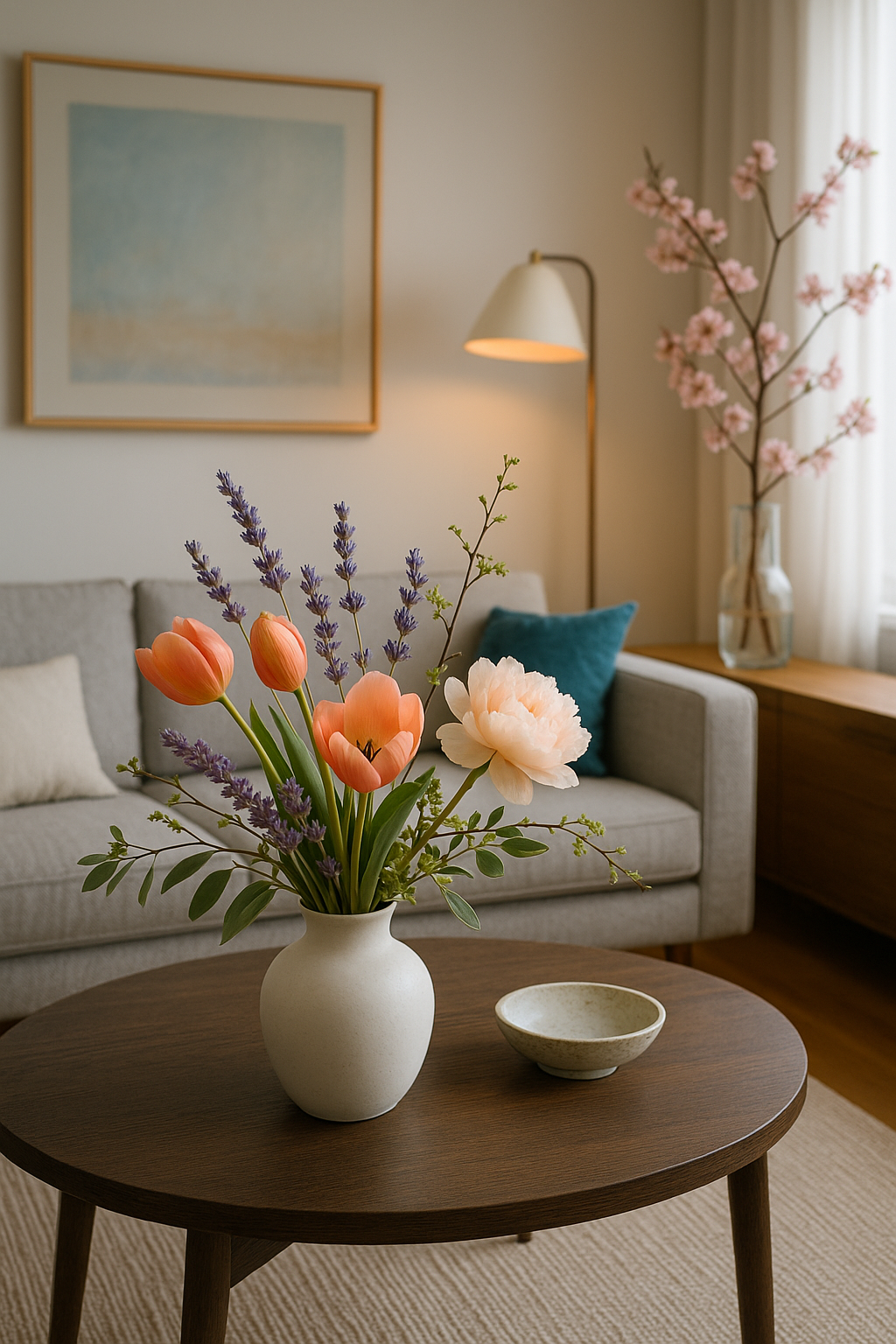
In a world of overstimulation and digital noise, contemporary interiors respond with restraint. They offer stillness, space, balance. They rely on clean geometry, muted tones, and light as a design element. But within that visual calm, there lies a risk: austerity. Without softness, minimalism becomes sterile. This is where flowers become essential.
Floral accents do more than decorate — they temper the sharp edges of modern design. They introduce an organic irregularity that soothes rather than disrupts. A single bloom in the right place can make a sleek space feel inhabited, alive, even poetic.
Let’s explore how floral elements — when chosen and placed with care — become essential components of serene, contemporary living.
The Contemporary Ethos: Simplicity with Intention
Modern interiors prioritize:
- Open floor plans
- Functional, sculptural furniture
- Monochrome or earth-tone palettes
- Natural materials
- Few decorative objects — but each one meaningful
In such spaces, every addition has visual weight. Every object must contribute to calm, not clutter. So when flowers enter the scene, they are not merely embellishment — they are punctuation.
Like a quiet sentence that says just enough.
Choosing the Right Flowers for a Minimalist Palette
Contemporary design craves clarity. It invites floral choices that are subtle in color, graphic in shape, and elegant in posture.
Here are flowers that harmonize with that philosophy:
Calla Lilies – Pure lines, sculptural form, either in pristine white or deep, moody tones like burgundy or charcoal purple.
Orchids – Graceful yet architectural; perfect for floating in open spaces or echoing the lines of furniture.
Tulips – Gentle and dynamic; they curve and lean toward light, bringing motion to stillness.
Lavender – Lean stems and calming scent; their texture contrasts beautifully with smooth surfaces.
Peonies – Seasonal softness in a cloud of petals; best used sparingly for visual impact.
Cherry Blossoms – Minimal yet expressive; their branching shape creates structure without heaviness.
Anemones – Simple petals with bold centers — perfect for contrast in a neutral space.
Avoid mixed bouquets or overly colorful arrangements. In contemporary spaces, one floral voice is louder than many.
Placement as a Design Gesture
In contemporary interiors, flowers should never feel “added on.” Their placement must be deliberate — as part of the composition of the space.
Try these ideas:
- A single calla lily in a tall ceramic vase on a console table
- A stem of orchids in a clear cylinder on the floor near a window
- Lavender sprigs in a frosted bottle by the bathtub
- A low, dark bowl of white tulips on a walnut coffee table
- One anemone in a wall-mounted tube above a reading corner
- A branch of cherry blossom placed diagonally across a long shelf
Let space surround the arrangement. Negative space is part of the message.
Containers as Architectural Elements
The vessel is not passive. In contemporary design, it is a partner to the plant.
Choose containers that embody simplicity and material integrity:
- Matte ceramic in soft earth tones or black
- Clear glass in geometric shapes
- Metal or concrete for contrast and industrial textures
- Unfinished wood trays beneath vases to ground the object
- Stone bowls for weight and stability
Avoid anything ornate or pastel. Focus on form and material.
Let the container echo the mood of the space: quiet, intentional, unadorned.
Playing with Light and Shadow
Contemporary interiors often make dramatic use of natural light and shadow. These effects can be enhanced with floral elements.
- Let cherry blossoms catch the warm rays of the setting sun
- Place lavender where early light stretches across the floor
- Let orchids mimic the lines of light from pendant lamps
- Position a single bloom where shadow and light meet — as if painting the moment
Flowers can change throughout the day. Let them interact with light, rather than exist apart from it.
Soft Contrast Within Monochrome Spaces
In a room of whites and grays, a soft blush peony becomes a whisper of emotion. In a dark-toned entryway, a pale branch becomes a memory of light. This is the art of floral contrast in minimalist design.
Try these combinations:
- A charcoal sofa with a bowl of cream tulips
- A white marble kitchen with a stem of soft lavender
- A deep navy reading nook with a coral ranunculus
- A bare wooden bench with a single branch of cherry blossom
These are not explosions of color. They are interruptions of stillness — intentional and memorable.
Rhythm, Ritual, and Renewal
Flowers offer a rhythm to the interior. Their care becomes a ritual. Their presence reminds us of impermanence — and how beautiful that can be.
Even in the most pared-down interior, you can create a living relationship with the floral element:
- Refresh the water every few days
- Replace blooms weekly or seasonally
- Let the arrangement shift over time — fewer stems, or a change in height
- Follow seasonal cycles: lavender in spring, peonies in early summer, dry branches in autumn
This ritual doesn’t interrupt the minimal space. It enlivens it.
Final Reflection: Where Silence Blooms
Floral accents in contemporary homes are not nostalgic echoes of tradition. They are moments of softness within structure. They say: This space breathes. They whisper: Here, beauty is temporary. But always welcome.
A single flower in a modern room is not a romantic gesture. It is a design decision — and a human one.
So let the calla curve. Let the blossom drift. Let the lavender stand in silence.
Let your home be modern. But let it feel alive.