
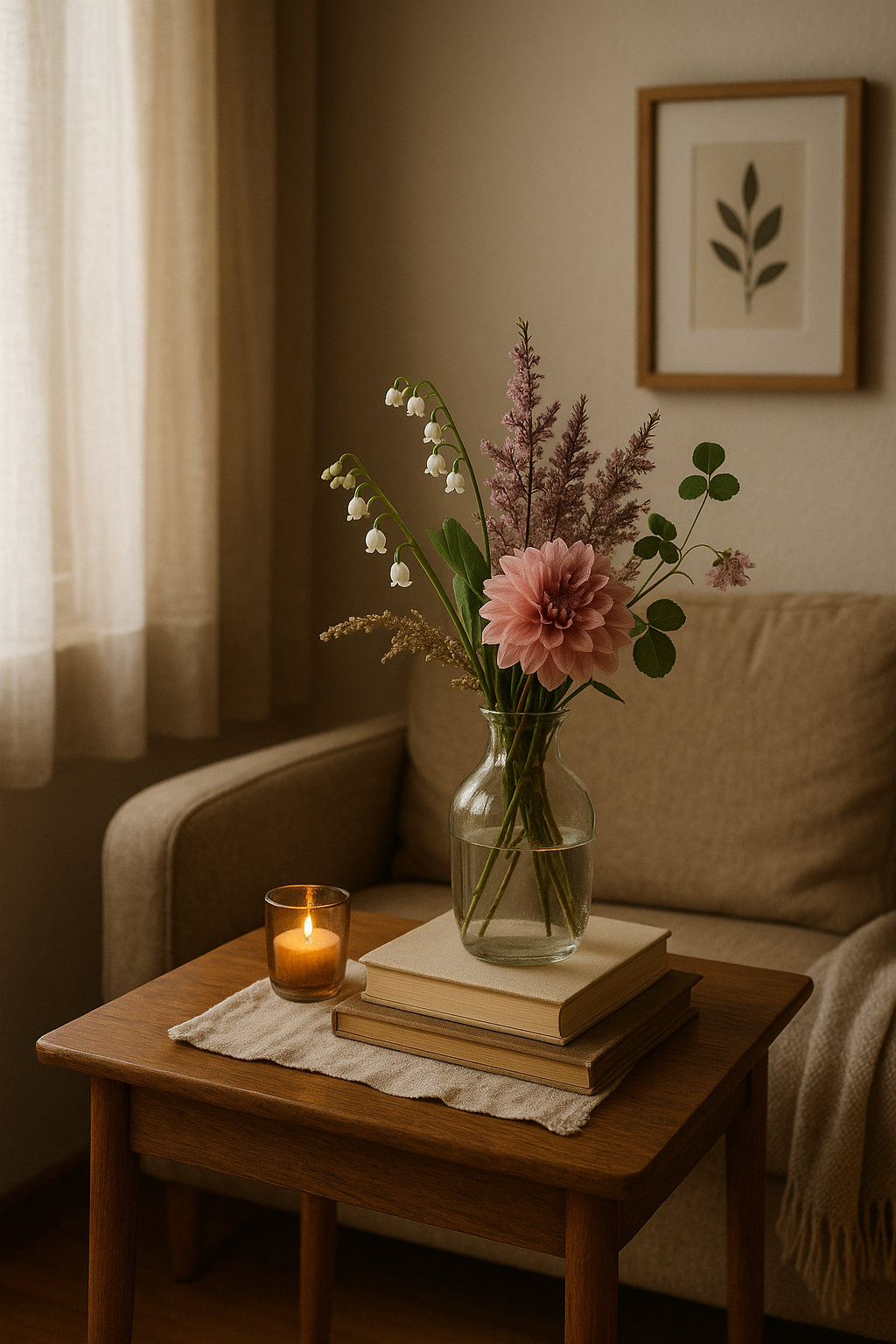
There is something sacred about a quiet corner. Not silent, but hushed. Not isolated, but intimate. In the rhythm of a home, these small spaces are often overlooked — yet they are the ones that speak most personally. A chair beneath a window, a narrow shelf in the light, a reading nook framed by quiet walls — they are the places where thought collects, where the day exhales.
And in these corners, floral design finds its most poetic expression.
Flowers in small, thoughtful arrangements can transform forgotten spaces into sanctuaries. They are not ornamental. They are invitations — to pause, to reflect, to feel. This article explores how to curate beauty and atmosphere through floral design in the quiet corners of a home.
Why Corners Matter
Corners are where rooms turn in on themselves. They are not the center of attention, and that’s exactly their power. In small living spaces, these transitional areas hold great potential:
- They offer privacy within openness
- They soften the hard geometry of architecture
- They give focus to the otherwise undefined
- They allow for design on a smaller, more intimate scale
In floral terms, they offer the perfect canvas for delicate compositions — arrangements that don’t demand space, but elevate it.
Floral Types for Intimate Spaces
The flowers you choose for quiet corners should mirror the spirit of the space: calm, gentle, intentional.
Best Choices:
Lavender – With its pale hue and calming aroma, it adds serenity to any nook.
Tulips – Symbolic of grace and simplicity; their curved stems follow the light gently.
Dahlias – Compact, intricate, and perfect for corners that receive soft, filtered sun.
Miniature roses – Romantic and understated; ideal in vintage containers.
Heathers (urze) – Textured and earthy, excellent for rustic or minimalist settings.
Orchids – Their elegance fits perfectly in modern, curated environments.
Lily of the valley – A whisper of fragrance and purity in shadowed places.
Clover or wild herbs – For natural, forest-like touches that bring grounding energy.
Avoid overwhelming, large-scale bouquets. Focus on a few well-chosen stems that evoke mood rather than demand attention.
Light as a Floral Partner
Corners often deal with indirect or shifting light. This should be seen not as a limitation, but a canvas. Light adds narrative to flowers — changing their appearance across the day.
- Morning light brings clarity. Choose blooms with white or pastel tones to echo its freshness.
- Afternoon shadows make space for bolder colors: burgundy dahlias, deep pink tulips, soft lilac.
- Evening corners, lit by lamps or candles, come alive with warm-toned flowers and natural foliage.
Try positioning flowers near a reflective surface — a mirror, a brass lamp, or even a glass tray — to echo the bloom’s form through light.
The Role of the Vase
The container is part of the poem.
In quiet spaces, the vase should neither distract nor disappear. It should resonate — in shape, color, or material — with the spirit of the flower and the room.
Consider:
- A matte ceramic jug with wild lavender
- A slender glass bottle with a single dahlia
- A vintage teacup holding miniature roses
- A wood box filled with dry heathers and clover
- A minimal stone bowl with orchids and moss
The texture matters as much as the flower. A rough surface can ground the fragility of a petal; a sleek one can elevate it.
Arranging the Scene
Don’t aim for perfection. Aim for presence.
Place your floral arrangement on:
- A stack of books beside a reading chair
- A wooden stool in a hallway corner
- A low shelf near a window
- The ledge of a fireplace, if space allows
- A nightstand beneath a framed print
Surround it with softness — a linen cloth, a candle, a folded blanket. These elements create a setting where the flower is not just placed, but welcomed.
Rotation and Renewal
One of the gifts of floral design is its impermanence. Let your corner change with the week — or the mood.
- One day, lavender.
- Another, two tulips in a tall glass.
- Then, nothing but a cherry branch leaning in the light.
Don’t be afraid of emptiness between arrangements. The pause between blooms is as poetic as their presence.
Scent as Memory
A single flower can transform not just the sight of a space, but its feel.
Lavender soothes.
Mint awakens.
Rose comforts.
Let scent guide your floral selection. Place calming varieties in corners of rest. Bright, herbal scents can refresh a work or reading space.
Flowers are not only visual — they are emotional. They create an atmosphere that lingers in memory long after their petals have dropped.
Final Thought: The Gentle Revolution of Beauty
Design does not always require grand gestures. Sometimes, it begins in a corner — with a stem of lavender, a bowl of light, a moment of quiet color.
In these small spaces, floral design becomes more than arrangement. It becomes reflection. A way of saying: this corner matters. This moment is worth noticing.
A tulip in the morning sun. A dahlia casting shadow at dusk. A handful of herbs beside a book.
This is how a room begins to feel alive. Not louder, but truer.
This is the art of quiet corners.