
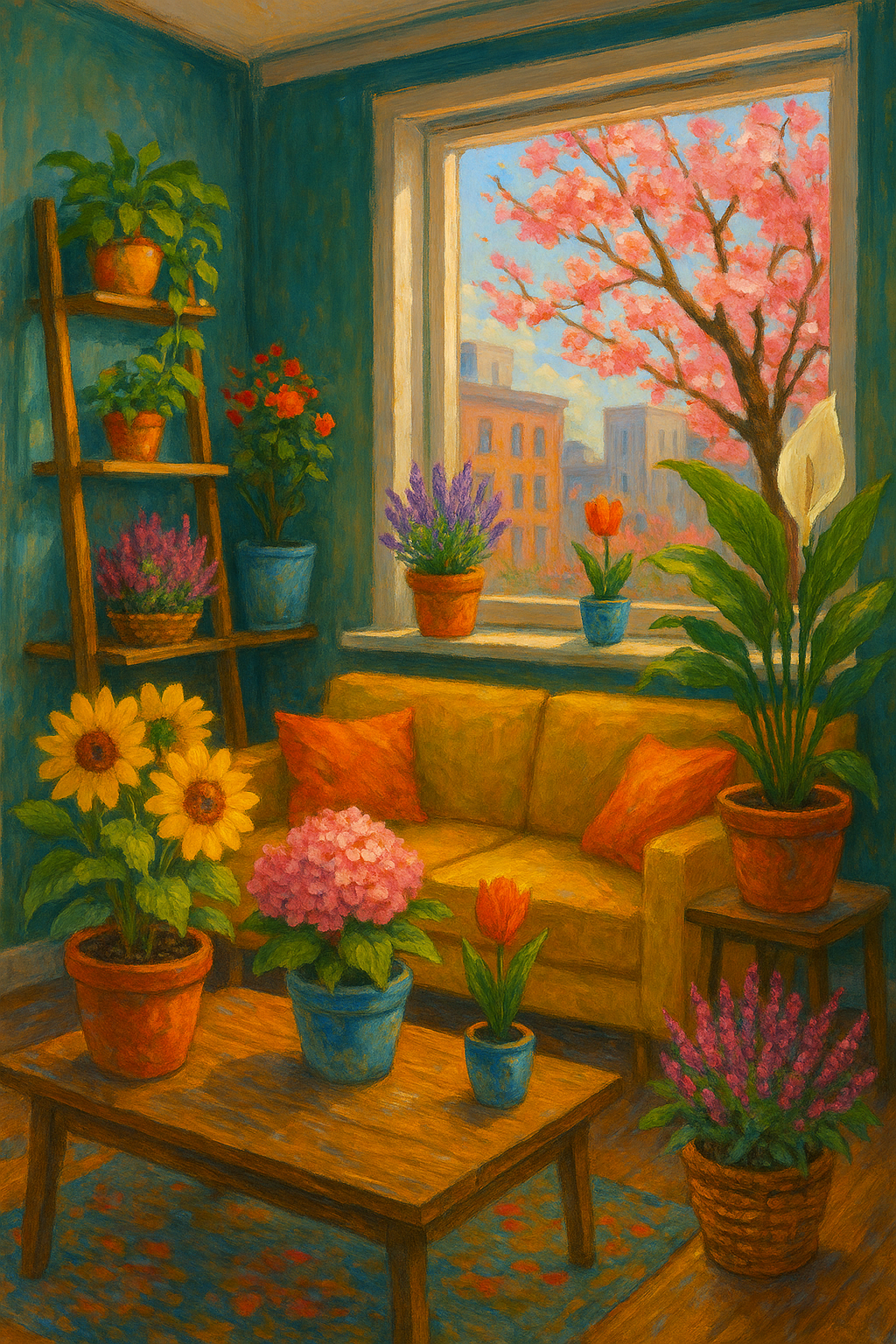
In the pulse of city life, where every square meter counts and concrete dominates the view, the presence of a single green leaf can feel like a revolution. For those living in small urban apartments, indoor plants are not just decoration — they are breath, pause, and presence. They reconnect us to something gentle and alive, in the midst of noise and motion.
Even in the most compact spaces, plants offer the power to transform the atmosphere. They don’t require vast gardens or sweeping windows — just a little intention, a little light, and care.
Rethinking Space: A Green Mindset
In small apartments, space is precious. Every object must earn its place — and plants do, again and again.
They bring:
- Visual softness to hard edges and minimalist corners
- Freshness to recycled air
- Sound absorption and calm
- A sense of rhythm, season, and slow time
They remind us that home isn’t measured in square meters, but in meaning.
Choosing the Right Plants for Small Spaces
The key is to select plants that offer beauty and impact without overwhelming the room.
Ideal choices include:
- Lavender: Soft scent, slender profile, perfect for windowsills
- Miniature Roses: Compact, romantic, and surprisingly hardy indoors
- Urze (Heather): European wild charm in small pots, thrives in bright spots
- Snake Plant: Tall, upright, and sculptural with a minimal footprint
- Peace Lily: Air-purifying, with occasional white blooms that bring elegance
- Pothos or Ivy: Can trail along shelves or be hung, adding vertical life
- Tulips or Narcissus (in season): Bulbs that offer brilliant seasonal color
Mixing practical greens with florals brings contrast and delicacy, especially in small rooms where every detail matters.
Smart Placement Without Clutter
In tight spaces, placement is everything. Think vertically and strategically:
- Use hanging planters near windows or corners
- Install wall-mounted shelves with one or two cascading plants
- Place slender plants like lilies or orchids on nightstands or counters
- Let lavender or rosemary thrive on kitchen sills — both fragrant and useful
And remember: less is more. One well-placed plant can bring more serenity than five crowding a shelf.
Combining Nature and Light
Natural light is limited in many apartments, but even soft indirect light can be enough.
- Place florals like papoulas, tulips, or miniature orchids in brighter spots
- Use LED grow lights disguised in elegant fixtures for darker corners
- Position mirrors near plants to bounce light and extend the sense of openness
And in the darkest corners? Consider soft foliage like fern varieties or artistic branches — even artificial cherry blossom stems can offer visual magic when styled with care.
European Floral Touches: Beauty in Bloom
There’s something deeply poetic about introducing traditionally European flowers into a small modern space. Think of a single:
- Tulip in a slender vase on a breakfast table
- Lavender sprig beside a reading chair
- White lily resting on a bathroom shelf
- Or a cherry blossom branch styled as seasonal décor
These elements offer visual poetry — not for realism, but for resonance. As if the seasons could visit you, even on the sixth floor of a city building.
A Place to Breathe
Small apartments can feel crowded — by objects, thoughts, screens, routines. Plants interrupt that. They ask for nothing loud. They simply exist — quietly, beautifully.
Caring for them is not a chore, but a ritual:
- Watering with attention
- Turning the pot for better light
- Watching a bud form and bloom
Even one plant, even one bloom, creates a moment of stillness inside the movement.
Final Thought: Growing Joy in Compact Living
You don’t need sprawling square footage to live well. You don’t need a backyard to feel connected to nature. In a small apartment, a plant is more than a touch of green — it’s proof that life thrives where it’s nurtured.
With the right plant, a tight corner becomes a soft vignette. A windowsill becomes a garden. A home becomes a sanctuary.
And suddenly, the smallest space feels infinite.