
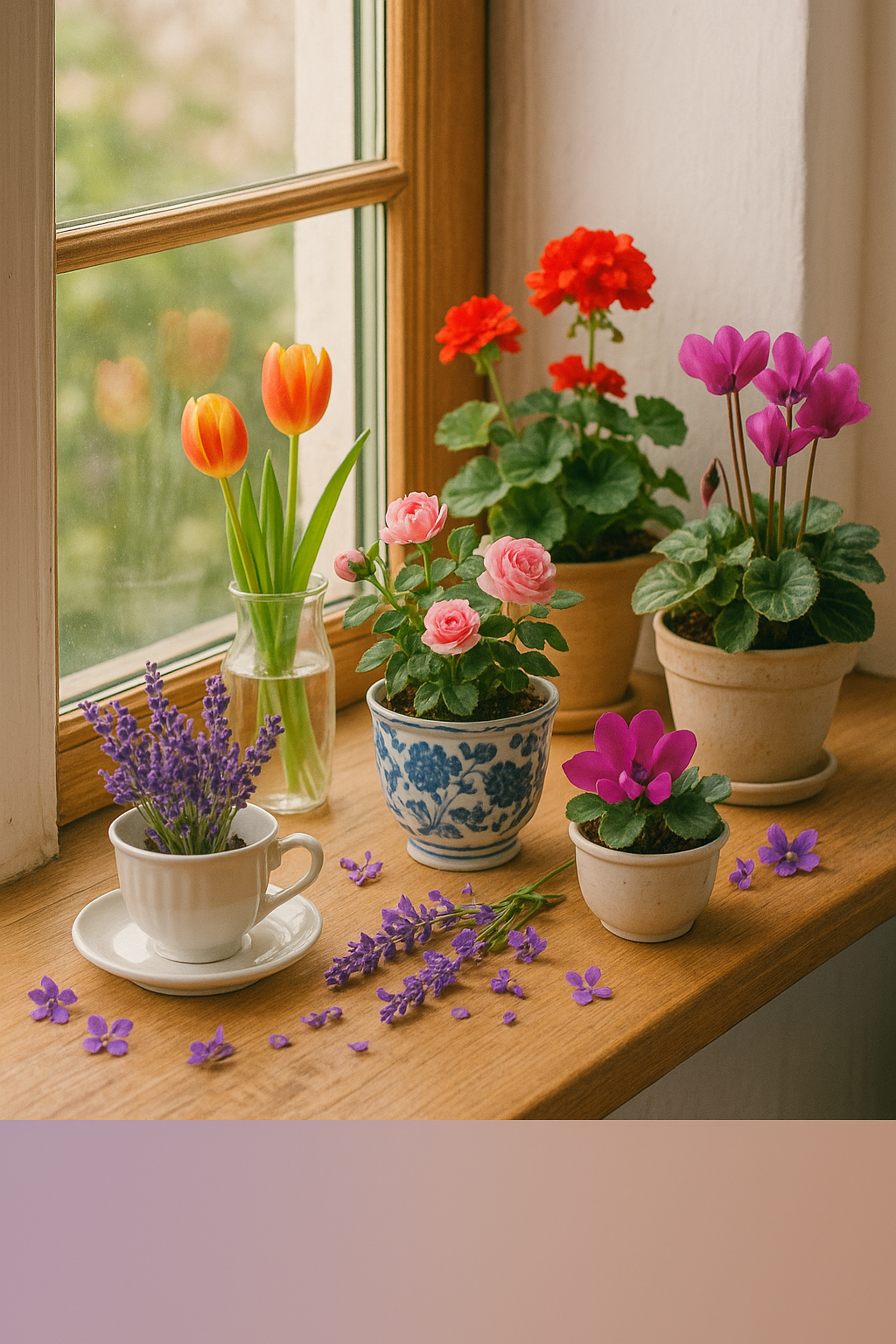
There is a quiet intimacy to a windowsill. It is not merely a ledge; it is a threshold — a soft border between the controlled interior and the vast unpredictability of the outdoors. When adorned with flowers, this narrow space becomes a poetic line of connection, where sunlight meets petal, and glass frames the slow rhythm of blooming life.
To cultivate a windowsill is to curate an edge — one that breathes with the seasons, dances with light, and offers beauty in its most immediate, unguarded form. It is the simplest stage for nature to enter our homes without fanfare, asking only for presence, light, and a little care.
Why Windowsills Matter in Interior Aesthetics
The windowsill is often overlooked in design. Yet it holds remarkable potential. It receives light and frames the view. It is a pause between the room and the world. Unlike furniture or walls, a sill is a dynamic surface — warmed by sun, touched by shadow, and shaped by season.
Adorning a windowsill with flowers activates this potential. The flowers draw the eye. They create a soft visual punctuation to the architectural line. They bloom quietly in the background of daily life — offering texture, color, scent, and memory without ever imposing.
And most importantly, they change. What is in bloom today will fade tomorrow. This gentle ephemerality makes a windowsill a living calendar, marking the passage of time in petals and stems.
Choosing the Right Flowers for the Windowsill
Not every flower belongs on a windowsill. The constraints of space, light, and container size mean that your selections must be deliberate, even minimalist.
Ideal flowers for sill-side living include:
Miniature roses – Compact and elegant, ideal for filtered light
Narcissus (paperwhites) – Light, fragrant blooms that suit cooler windows
Lavender – Hardy and aromatic, with slender stems that catch the light
Cyclamen – Perfect for wintery sills, with sculptural leaves and bright blooms
Geraniums – Classic and colorful, thriving in sunny spots
Pansies and violas – Sweet, expressive faces that love partial light
Hyacinths – Intense scent, bold form, and seasonal presence
Amaryllis – Tall and dramatic, perfect for south-facing windows
Each of these flowers offers its own temperament, responding not only to sunlight but to the atmosphere of the room. Some lean toward warmth, others thrive in cool morning light. The trick is to choose companions that align with the rhythm of your space.
Light, Bloom, and Shadow: The Dance of the Day
What makes a windowsill special is the light it receives. Morning sun is gentle and diffuse; afternoon light is bolder, more direct. Both are useful, but you must observe.
In east-facing windows, opt for soft bloomers — paperwhites, violets, or cyclamen. These respond well to the tenderness of dawn.
In south-facing windows, let bold flowers reign: geraniums, amaryllis, or even miniature sunflowers in season. These windows crave drama and resilience.
West-facing sills are ideal for late-bloomers and richly colored petals — perhaps a cluster of anemones or hyacinths, drinking in the warmth of the descending sun.
North-facing windows can support hardy greens and delicate flowers that prefer cooler light, like jasmine or lavender in smaller pots.
Let the light choreograph the bloom. Move arrangements as needed. Replace plants that struggle. A windowsill should never be static — it should evolve, quietly, with the seasons.
Containers: Framing the Floral Narrative
On a windowsill, every detail counts. The container is not merely a vessel — it is a frame, a statement, a stylistic whisper.
Ideal container choices include:
Ceramic pots in neutral or earthen tones
Glass vases for rooting bulbs or displaying cut blooms
Woven baskets with liners, lending rustic warmth
Vintage tins or teacups, where charm outweighs scale
Stone or concrete mini-planters for sculptural elegance
Select containers that harmonize with both the flower and the surrounding architecture. A minimalist interior may benefit from low, linear vessels. A romantic setting might call for curved forms, patina, or texture.
Never overcrowd. A few carefully chosen stems in beautiful light say more than a crowded mass of blooms.
Seasonal Rotations and the Ritual of Renewal
A windowsill garden is not fixed. It moves with the earth’s tilt, the months, the hours.
In spring, bulbs awaken — crocus, daffodil, tulip — gentle reminders of the world reemerging.
In summer, windows burst with color: geraniums, daisies, zinnias.
Autumn invites tones of rust, amber, and mauve — dried arrangements or fading petals.
Winter is for sparseness — a single amaryllis, a bare branch catching low light.
Changing the sill becomes a quiet ritual. It asks for awareness: What light is here now? What bloom belongs to this moment?
This act of care connects you not only to the plant but to the season, the passage of time, and the slow beauty of noticing.
The Emotional Effect of a Flowered Edge
The human eye is drawn to boundaries. A room feels complete when its edges are tended to — not hidden, but celebrated. A blooming windowsill gives a room softness, focus, and feeling.
It does more than decorate. It changes the way we move through space.
A vase of violets at breakfast can soften the noise of the day ahead.
A pot of rosemary on the kitchen sill scents the room in the evening.
A fading rose at the bedroom window reminds us that beauty, too, is fleeting — and precious.
Flowers teach us to look again. The sill becomes a frame for contemplation.
Final Thought: Living on the Ledge
To curate a blooming windowsill is to celebrate the margins — the gentle edges where the interior meets the outer world. It is to recognize the power of quiet beauty, the elegance of simplicity, and the pleasure of tending to what is small but meaningful.
Let your windowsill be a stage for slow transformation. A petal, a leaf, a shadow, a stem — each part of a living sentence, unfolding in time and light.
You do not need a garden to feel close to nature. A ledge, some soil, and a little love will do.
Let your windowsill bloom.